Keep central policy central
Use HashiCorp Vault for service identity, dynamic credentials, leases, audit, and central access rules.

Vault comparison
HashiCorp Vault handles central secrets infrastructure. Automic Vault handles the local moment when an AI agent can read files, run CLIs, and act with developer credentials.
Last updated: May 24, 2026
HashiCorp Vault and Automic Vault solve different layers of agent security. HashiCorp Vault centralizes secret policy; Automic Vault controls the local macOS step where an AI agent can read files, call CLIs, or expose credentials.
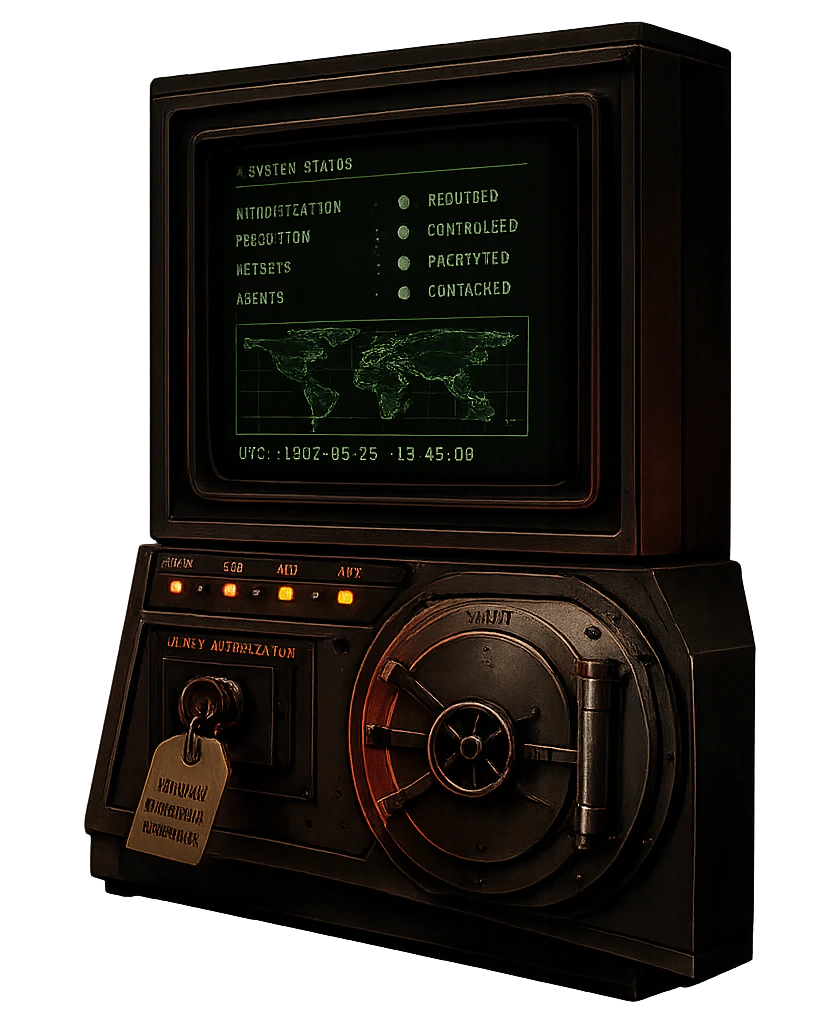
Use the right layer
A credential can come from a strong vault and still end up in an env var, config file, shell, or tool output that an agent can read.
Use HashiCorp Vault for service identity, dynamic credentials, leases, audit, and central access rules.
Use Automic Vault where agent sessions touch local tools, local files, and developer credentials.
The risky decision is often which command is about to run, not whether a secret exists in a central store.
Root-owned installs reduce the chance that an agent rewrites the binary that receives a credential.
Best fit
| Layer | Best fit for AI agent security |
|---|---|
| HashiCorp Vault | Centralizes policy, rotation, leasing, audit, and service access across infrastructure. |
| Automic Vault | Controls local secret exposure, approved injection, hardened package roots, and agent command gates on macOS. |
| Together | Let central systems govern credentials, then keep local agent use scoped to approved tools. |
Related protections
FAQ
No. HashiCorp Vault is a central secret and policy system; Automic Vault focuses on the local Mac where an AI agent runs tools.
Yes. A central vault can remain the primary secret system while Automic Vault controls local injection and command approval.
AI agents can read files and run tools locally, so the final credential handoff needs protection even when upstream storage is strong.