
LiteLLM PyPI compromise
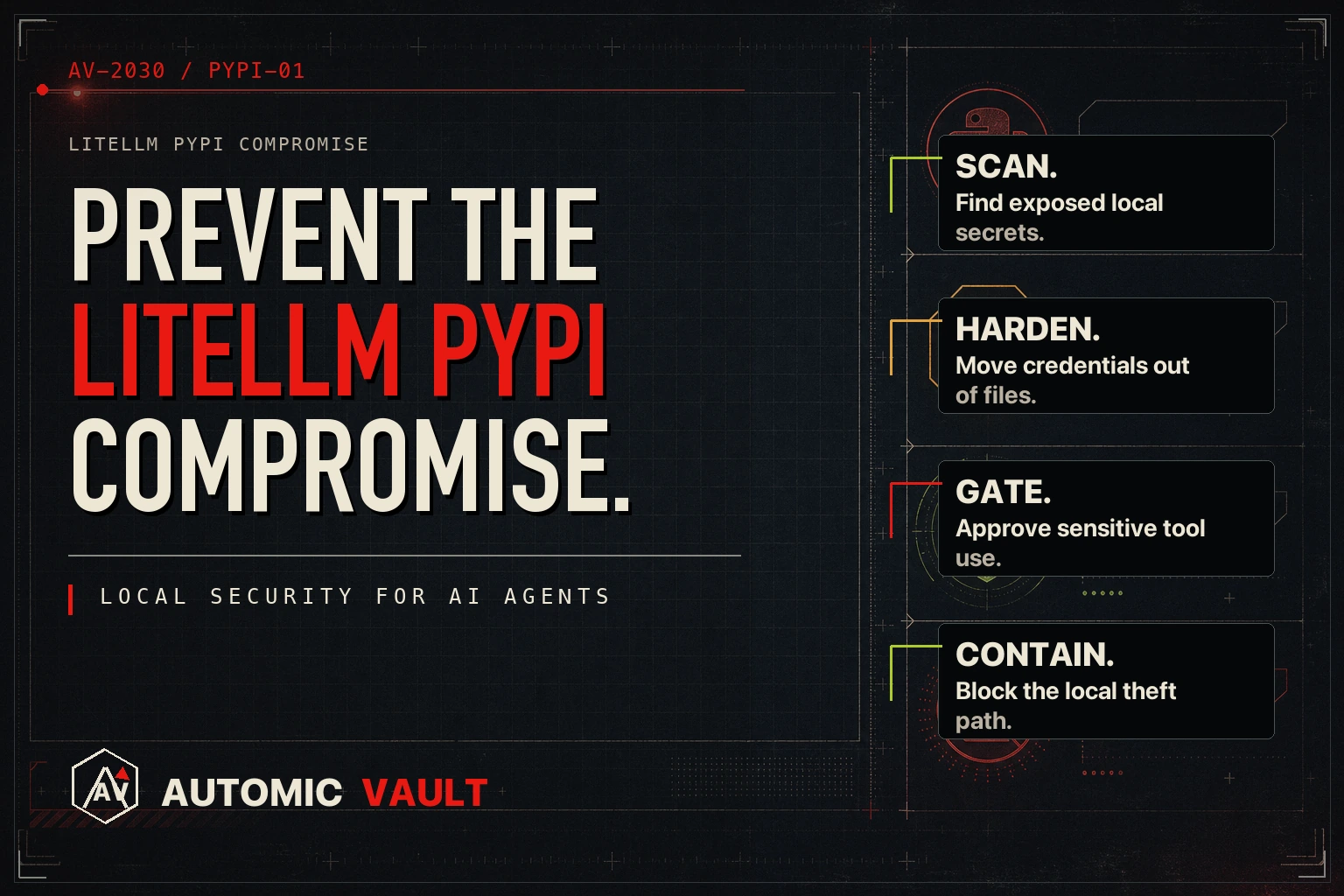
How Automic Vault would have prevented the LiteLLM PyPI compromise.
The poisoned LiteLLM releases were an upstream PyPI failure, but the breach became dangerous only after package code inherited local secrets. Automic Vault would have prevented that workstation credential theft phase.
Published March 25, 2026
Automic Vault would have prevented the damaging local phase of this incident: the moment malicious package or extension code tried to read workstation secrets, use credential-bearing tools, or install persistence as the developer.
Incident Facts
local execution- Date
- March 24, 2026
- Trigger
- litellm 1.82.7 ran through package code; 1.82.8 added a Python .pth startup hook.
- Local targets
- ~/.ssh, cloud credential files, environment variables, Kubernetes tokens, database passwords, and .env-style secrets.
- Follow-on behavior
- Data exfiltration to a lookalike LiteLLM domain plus persistence under user config and systemd paths.
What Happened?
incident recordOn March 24, 2026, malicious LiteLLM releases 1.82.7 and 1.82.8 reached PyPI. Public analysis from Datadog and Snyk ties the poisoned releases to a wider TeamPCP supply-chain campaign that first stole publishing material through other developer tooling.
The high-risk version was 1.82.8 because the attacker added a Python .pth file. Python processes load .pth files from site-packages during interpreter startup, so the malware did not need a developer to explicitly import LiteLLM in the application path. A normal local Python startup in the affected environment could trigger collection.
The payload looked for the exact files developers tend to leave on a Mac or Linux workstation: SSH keys, cloud CLI credentials, Kubernetes material, database passwords, shell-adjacent secrets, and environment variables. This was a local developer credential theft incident.
Failure Point
root causeThe core failure was ambient authority. Once the package executed, it ran as the developer and could read the same home-directory files the developer could read. PyPI quarantine shortened the exposure window, but quarantine happened after the malicious code had already reached some machines.
A lockfile, vulnerability scanner, or registry advisory can tell you that a bad release exists. It cannot un-read SSH keys, cloud tokens, or kubeconfig from a machine where the payload has already run. Prevention has to happen before package code can touch those files.
Where Automic Vault Would Have Stopped It
preventionSecret files would not be readable
Automic Vault moves supported secrets out of plaintext files and makes exposed local hazards visible. LiteLLM package code would not have found raw AWS, GitHub, .env, or SSH-adjacent material sitting in easy-read locations.
Approved tools receive scoped secrets
A legitimate LiteLLM process can receive the credential it is approved to use. A .pth startup hook or package import does not get a broad dump of every local credential just because Python started.
Persistence and sensitive commands would be visible
Service writes, helper execution, and privileged follow-on behavior belong at an approval boundary. The attempt to install a user-level monitor would have become an explicit local security event instead of a silent second stage.
Workstation Prevention Boundary
local boundaryAutomic Vault would have prevented the damaging phase by changing the default: package code gets the project and approved tool context, not the developer account as a readable secret store.
In an Automic Vault setup, the poisoned wheel could still arrive from PyPI. The difference is what happens next. The startup hook would run inside a machine where important credentials have been moved behind a local broker, sensitive tool use requires approval, and suspicious package state is visible as a local hazard.
That means the attacker would have had to defeat the local runtime boundary instead of merely reading files. For this incident, that boundary is the difference between a bad package install and a full credential rotation event.
Automic Vault does not claim to make npm, PyPI, GitHub Actions, or extension marketplaces impossible to compromise. The prevention claim is narrower and more useful: compromised tools should not inherit every credential and sensitive path on a developer machine.